Service — EMR Software
EMR Software in Ethiopia for Clinics and Hospitals
An electronic medical record system replaces paper files with secure digital patient records, appointments, billing and reports. Rylo plans and builds EMR software in Addis Ababa around your clinic's workflow. Fit with the Ministry of Health's current standards is checked with you during discovery, before any build starts.
01Work
Healthcare software we have built.
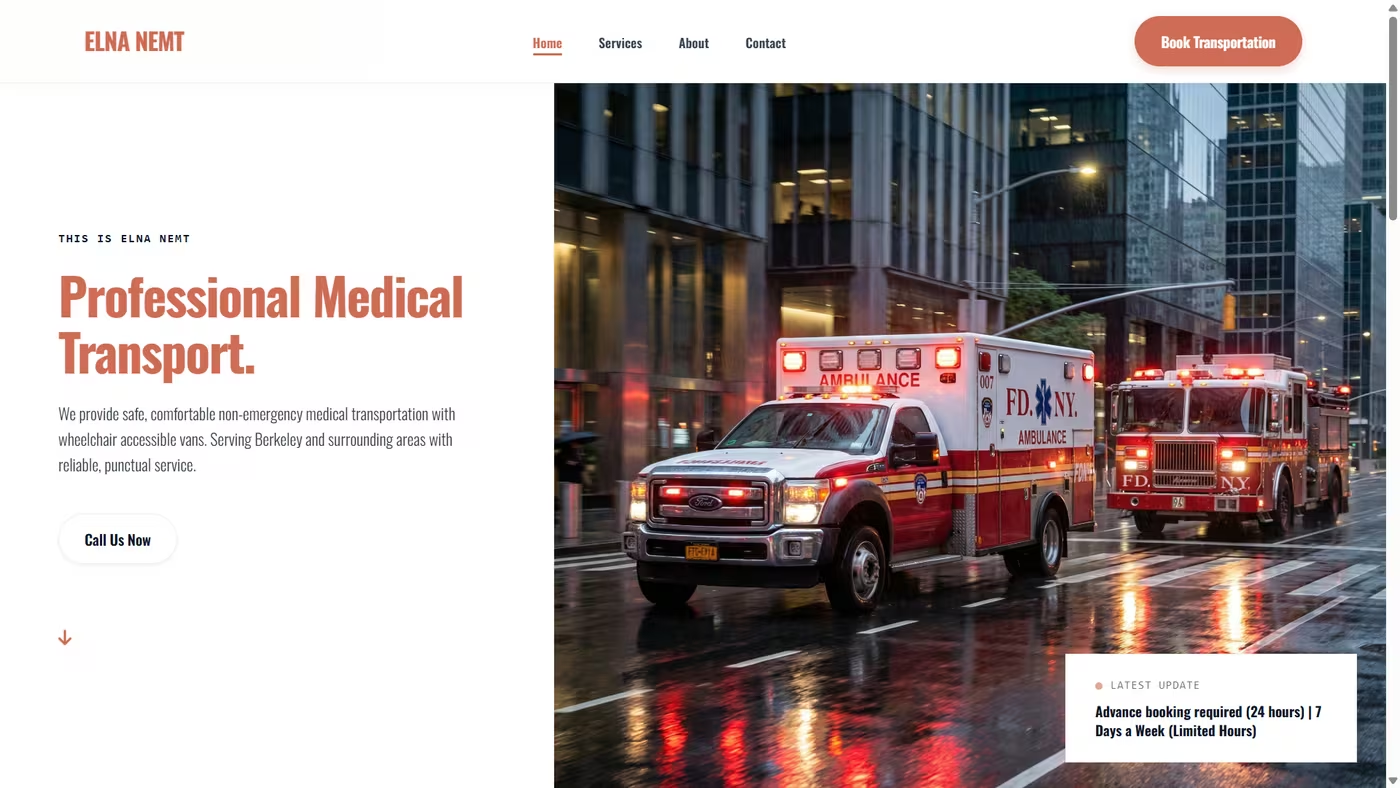
ELNA NEMT is a booking and dispatch system for a non-emergency medical transport company. It is not an EMR. We show it because it is healthcare software with patient requests, email verification and a private admin dashboard, built and handed over by us.
ELNA NEMT
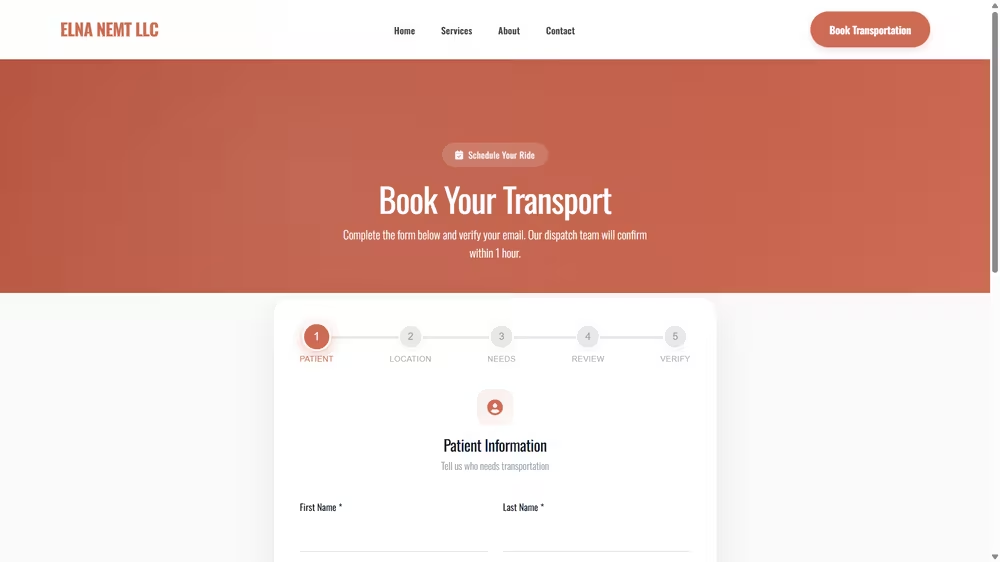
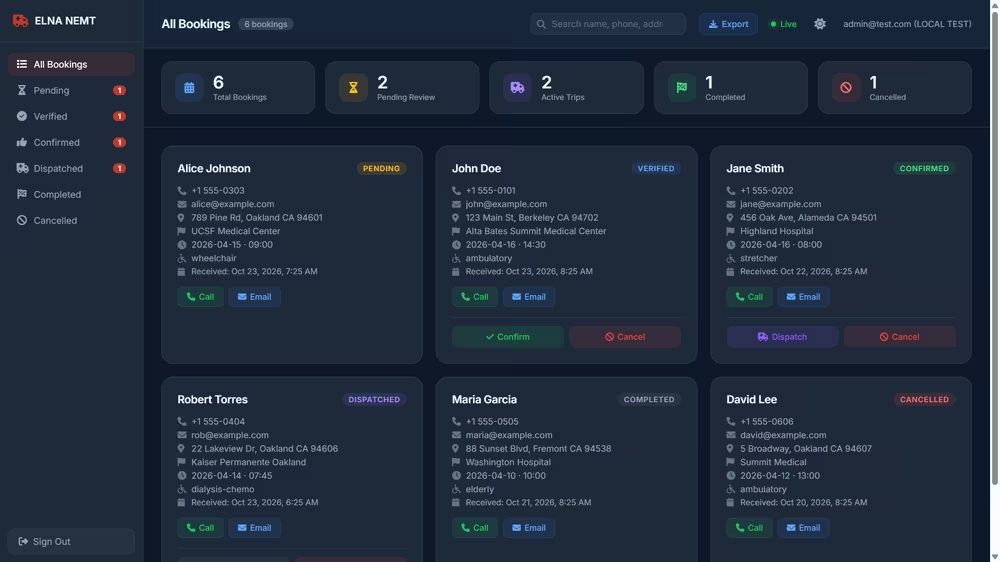
A site and booking system for a non-emergency medical transportation company serving the Berkeley area. Patients book a ride in five steps and verify their email, and the dispatch team works every request from a private admin dashboard, from review through to a completed trip.
- 5-step booking flow
- Email-verified requests
- 6 trip statuses
02Basics
What is an EMR, and does a small clinic need one?
An EMR is the digital version of a patient's file inside one clinic or hospital: visits, diagnoses, prescriptions, test results and billing. A small clinic usually needs one when finding a patient's history on paper is slow, when more than one clinician sees the same patient, or when reports for owners or authorities take days to compile.
03Scope
What should an EMR record and report?
01
Patient registration and records
One record per patient with identity, history, visits and attachments, searchable by name, phone or card number.
02
Appointments and visit flow
Booking, queue and clinician view, so the front desk and the consulting room see the same list.
03
Orders and results
Laboratory, pharmacy and imaging requests and results, where your facility uses them.
04
Billing and payments
Charges, receipts and payment status tied to the visit, with local payment methods where they are needed.
05
Roles, access and audit log
Each person sees only what their role needs, and changes to a record are logged.
06
Reports for management
Visit counts, revenue and stock reports your owners and managers can read without a spreadsheet.
04Context
How does an EMR fit Ethiopia's national health systems?
The Ethiopian Ministry of Health's strategic plan recommends an electronic medical record system to improve health care delivery and streamline data systems (source 1). The Central Ethiopia Regional Health Bureau describes EMR as one of several national digital health platforms, alongside DHIS2, eCHIS and the master facility registry, which is designed to work with them (source 2).
Requirements for health information systems are set by the authorities and can change. We do not guess them: we confirm the current rules with you and the relevant authority during discovery, and write them into the scope before anything is built.
05Approach
Should we build custom or use an existing EMR?
Sometimes an existing system fits your clinic and the right work is configuring it, connecting it to your billing and training your staff. Building custom makes sense when your workflow does not match anything that exists. In the free audit we tell you which applies, with the reasons, even when the answer is not to hire us for a build.
06Data
How do we protect patient data?
01
Access by role
Receptionist, nurse, doctor and manager each get the access their job needs and no more.
02
A record of changes
Edits to patient records are logged, so you can see who changed what and when.
03
Accounts you control
The patient data sits in accounts owned by your facility. We hand over every credential at launch.
04
Backups
Backups are planned and scheduled as part of the scope, not left until something goes wrong.
07Discovery
What does discovery cover?
01
Walk the patient journey
From registration to billing, we follow what happens today and where time is lost.
02
List records, roles and reports
We write down what must be recorded, who needs access and which reports matter.
03
Check requirements
We confirm the regulatory and data requirements that apply to your facility with you and the relevant authority.
04
Written scope
A fixed scope, price and timeline, usually within two working days of the audit, before any build.
08Questions
EMR questions.
Either, depending on what you have. If your current system works for part of the job, we connect to it and build only what is missing. If it is holding the clinic back, we plan a replacement with a safe way to move records across. The free audit gives you a written recommendation either way.
You do. The code sits in a repository under your organisation, and the patient data stays in accounts your facility controls. We hand over every credential at launch, so the system does not depend on us afterwards. You decide who inside your facility can see which records.
It depends on the facility. Some clinics have a steady connection and can use a normal web system. Others need parts of the system to keep working offline and sync later. We ask about your connection, power and devices during discovery, and design for what you actually have rather than assuming.
Training is part of the handover. We train your team on the real system using your own workflow, record the sessions so new staff can watch them later, and stay available for questions after launch. The time your staff need for training is agreed in the written scope before the build starts.
We do not claim any Ministry approval or certification for our EMR work. Requirements for health information systems are set by the authorities and can change, so we confirm the current rules with you and the relevant authority during discovery, and write them into the scope before anything is built.
09Sources
Sources.
- Tegegne MD et al. Electronic Medical Record System Use and Determinants in Ethiopia: Systematic Review and Meta-Analysis. JMIR Medical Informatics, 2023 (NIH PMC).
- Central Ethiopia Regional Health Bureau. Digital Health Systems.
10Guides
Related guides.
Website Development Cost in Ethiopia: 2026 Pricing
Ethiopian Payment Gateways 2026: Telebirr, Chapa & More
Related services: custom software, CRM, SEO for clinics and hospitals and web development.
Next step
Book a Free EMR Audit
Tell us how your clinic or hospital works today. We will come back with a fixed scope, price and timeline within two working days.